“I think of feedback as constructive, not positive or negative. You choose to do what you want with it.” Denise Morrison.
It’s true, when it’s your own book, your opinions get clouded. It’s always good to get outside feedback which is why a lot of writers use beta readers to help see what plot holes or difficulties there are in reading before you publish, and it’s a very useful tool to have. In this week’s blog I address some common questions about beta readers.
What is a beta reader?
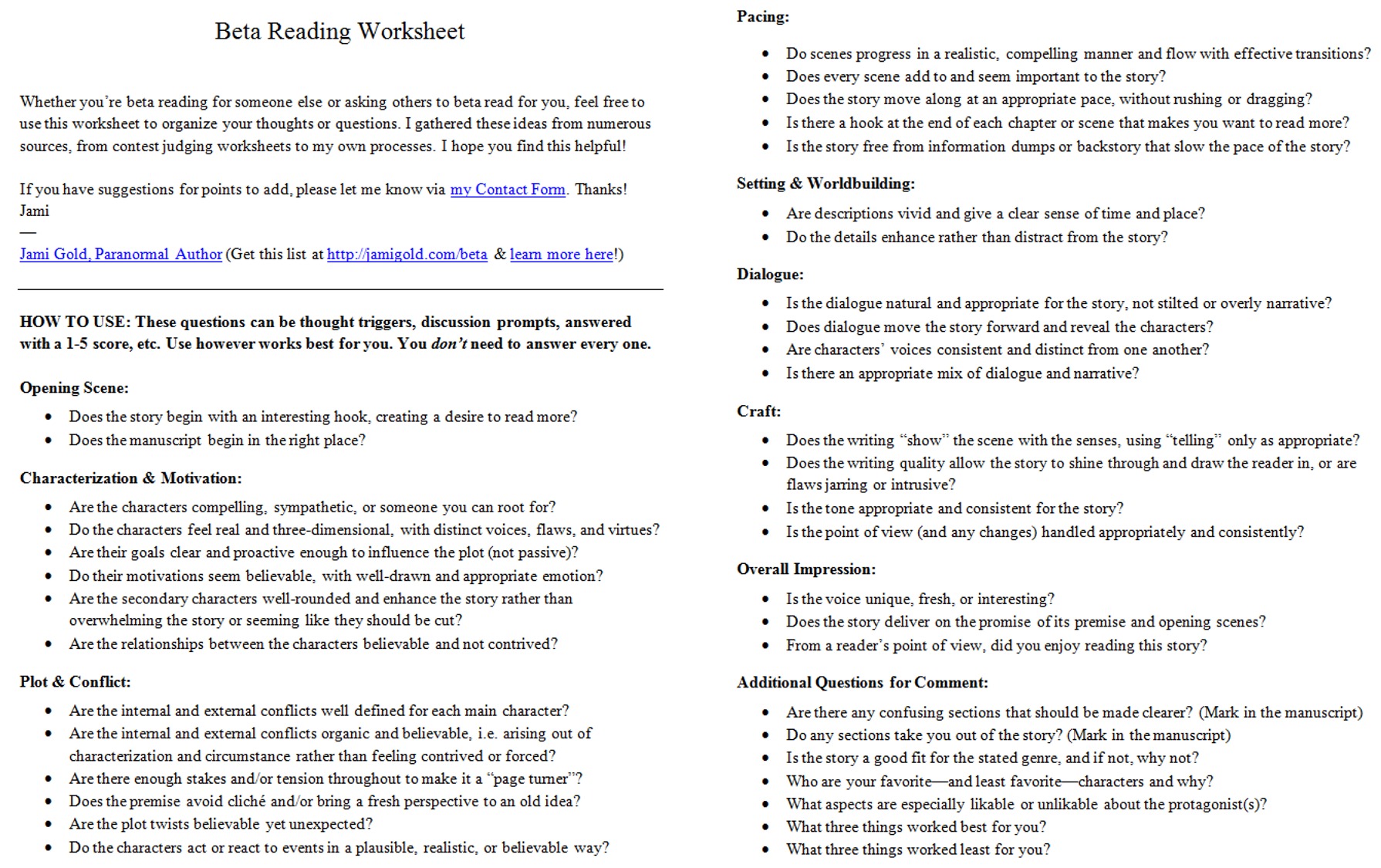
It’s someone who reads your book before release whether it be in an online form or in a full paperback form and provides critique either based on topics you ask them to look at or from their own mind. One way of getting beta readers to give proper structure to their feedback is to make a list of questions – one of which you can find here (source Jami Gold.) Beta readers can also come in useful when you need reviews for your book – ask them when the book is published to leave a review, stating they were an advance reader and give their feedback, as reviews raise awareness of the book’s profile, making it more likely other readers will give it a go.
Are beta readers free?
Generally yes, a lot of people do it out of the goodness of their heart or they want to just read your kind of book for free without buying it, but sometimes they may want something in return. Maybe they want to do a swap so you do a beta read of their book in exchange for yours, or they want to add it to their credentials. Beta readers shouldn’t ask for money (some might) but it doesn’t mean these are necessarily better or different, you can still get the services for free if you look around.
Where do you find beta readers?
If you don’t want to go far away, ask your family and friends out for help but in reality, impartial people are better. There’s lots of Facebook groups of beta readers but also places like Wattpad and Goodreads where they may hang out. Usually, you’ll start by giving a small description of your book and some information about the genre and maybe the age rating, depending on who it’s targeted at. Make sure to ask your beta readers what genres they generally read and what their time restrictions are and if there’s any topics that they may not feel comfortable reading about. The last thing you want is to send them a book only to have them say they didn’t enjoy it because they disapprove of your themes.
How can you trust them?
Unless you know them, how can you trust them? How do you know they won’t just take your book and pirate it? How do you protect yourself as an author? The best tip I’ve heard is by just sending over one chapter at a time, but I also chose to change my characters names just for sending it over to people I didn’t know. Just in case. It wasn’t that I didn’t trust them, but as a new indie author, I just wanted to err on the side of caution.
How do you make sure they do what you want?
It’s also important to be clear of your expectations. Some beta readers I used asked what I wanted them to do, but one just acted like an editor, pointing out the errors that my current editor was already working on. It wasn’t what I needed so this feedback was rendered moot. And as for ensuring they’ll actually commit to reading it? That’s another story. As I had a very quick turnaround with Atlantic Split, I found using beta readers tricky in that sense. A lot of them wanted to read a chapter a week but I wanted it back faster, so I settled on only sending the first three chapters. Which actually was a brilliant idea.
I ended up restructuring the whole book because of what my beta readers told me. I couldn’t see what the issue was but until five people pointed out the same thing I realised actually I was in the wrong. And when I changed the structure I felt like kicking myself – why didn’t I see this sooner? So in my opinion, whilst the beta readers didn’t have the full information, it was still very valuable feedback.
Anything else?
Finally, it’s important to ensure you can handle criticism of course but don’t necessarily take into account what all beta readers say, especially if it’s just one person with their own opinion that doesn’t relate to anyone else’s comments. Sure, if like me a lot of people are saying the same thing, then you need to pay attention, but at the end of the day you know your books best so if you don’t agree, you don’t have to change it. After all, these readers may have their own personal preference that may be different to everyone else’s.
It’s always good to get a second opinion and beta readers can provide invaluable feedback and a good insight into how to make your book even better. Don’t miss out this crucial step on the way to self publishing because it’s really important to have a way of getting into the mind of your reader.
Atlantic Split is the first book in The Luke Bright Series and is available to purchase NOW! Please follow me on my blog and my social media links below and use the links on my website to purchase a copy if you have not done so. Don’t forget to leave a review! The second book, At Liberty To Live will be released in AUTUMN 2018. Thank you once again for taking the time to read this blog post.
N.A.K.
 Neil A. King